
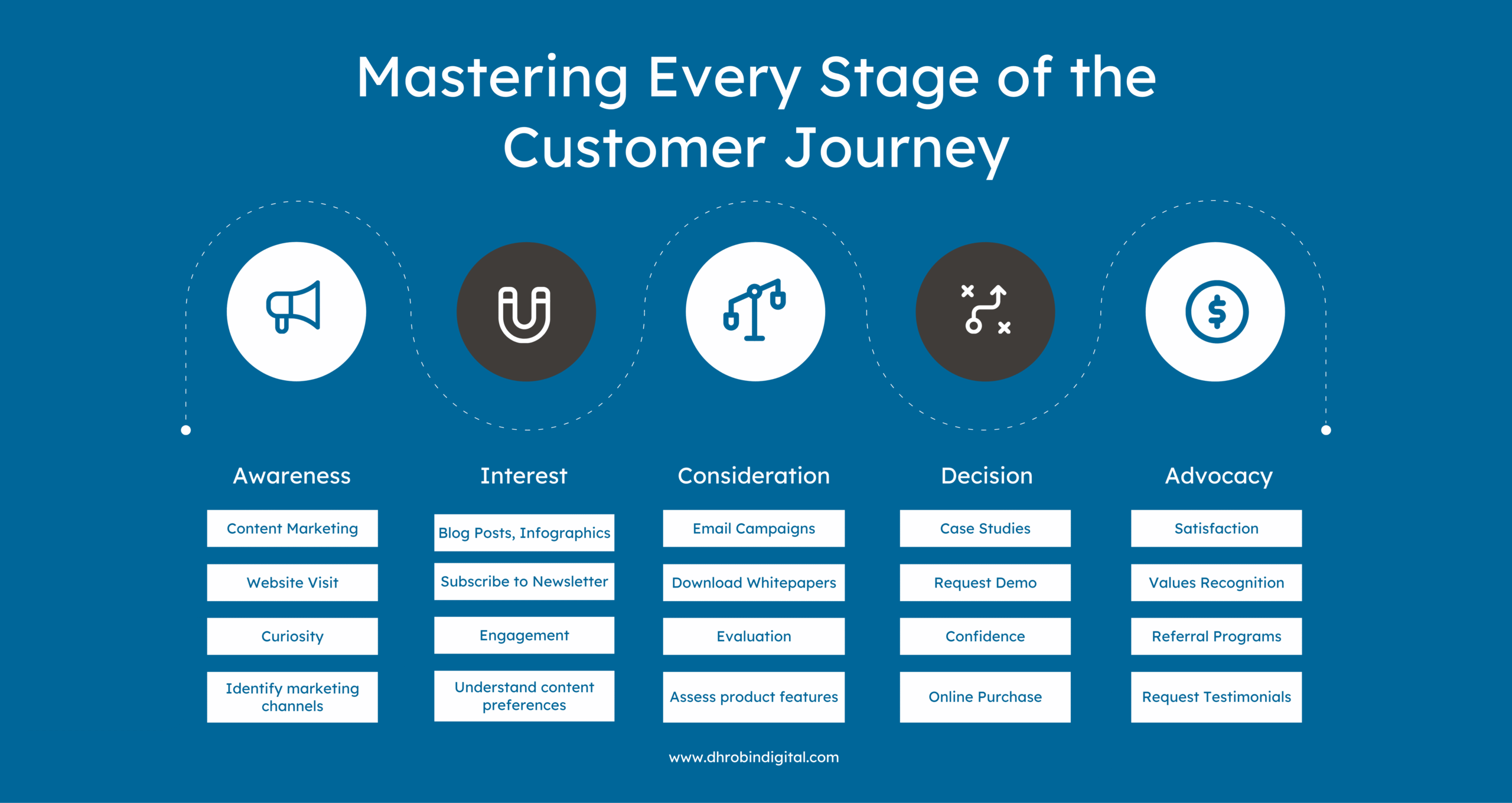
The customer journey represents the complete path a potential customer takes from the moment they first encounter your brand to the stage where they become a devoted advocate who promotes your products or services to others. It is not a single transaction or linear process, but rather a series of interconnected experiences, perceptions, and interactions that shape how a person feels about your brand over time.
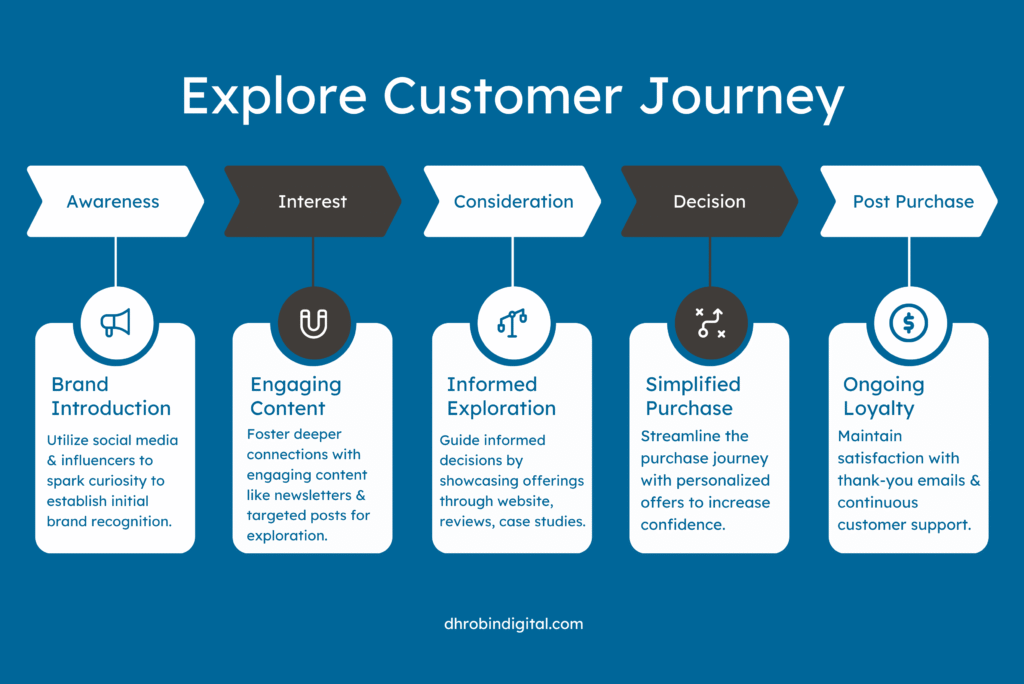
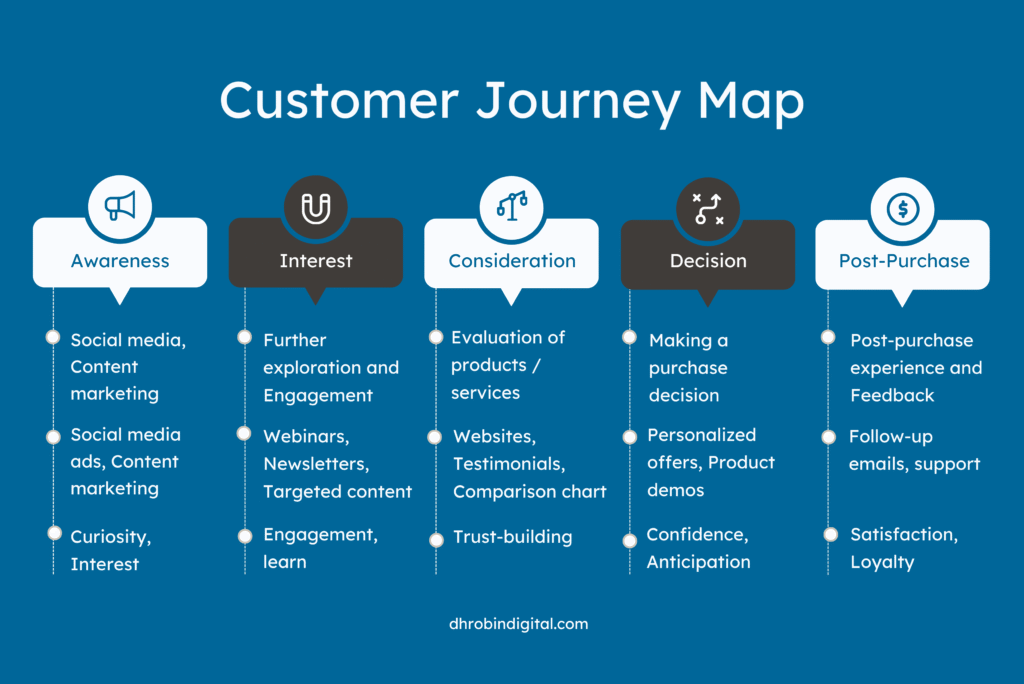
Understanding and carefully mapping this journey allows businesses to gain deep insights into customer motivations, expectations, and pain points. It helps marketing teams craft targeted campaigns that attract attention, sales teams engage with clarity and confidence, and customer support teams deliver meaningful assistance at the right moments. By visualizing how customers move from awareness to loyalty, organizations can identify gaps, remove friction points, and create a seamless, personalized experience at every step.
A well-crafted customer journey strategy ensures that every touchpoint, whether it’s a social media post, a website visit, an email, or a customer service interaction, aligns with the customer’s mindset and emotional state. This alignment fosters trust, enhances engagement, and builds the foundation for long-term brand loyalty. When each stage is intentionally designed and executed, customers don’t just buy once they return, refer others, and become true ambassadors of your brand.
In the following sections, we’ll explore each stage of the customer journey in depth, examining how businesses can transform a casual browser into a passionate superfan through thoughtful strategy, consistent communication, and authentic connection.
1. Awareness Stage
Objective
The awareness stage is the first interaction a potential customer has with your brand. At this stage, the goal is to make prospects aware that a solution to their problem exists—and that your brand provides it. Customers in this phase often do not know about your business, and they may not even fully understand their own problem.
Customer Mindset
“I have a problem or need, but I’m not sure what solutions exist.”
Seeking knowledge, inspiration, or guidance.
Open to information but not yet considering specific brands.
Touchpoints
Social media platforms (Instagram, TikTok, LinkedIn, Facebook) through ads, reels, or posts.
Blogs, SEO content, or thought leadership articles that answer relevant questions.
Influencer mentions or partnerships that raise brand awareness.
Google search and paid search ads.
Podcasts, webinars, or online media coverage.
Word-of-mouth recommendations from peers or colleagues.
Business Actions
Develop high-value, educational content that addresses common pain points.
Run targeted ad campaigns on platforms where your audience spends time.
Collaborate with influencers, industry experts, or media outlets.
Optimize content for search engines to capture organic interest.
Create engaging video or visual content that can be shared easily.
Key Performance Indicators (KPIs)
Impressions and reach (how many people see your content).
Website traffic from different sources.
Social media engagement metrics: likes, shares, comments.
Brand recall or recognition metrics (via surveys or social listening).
Example
A SaaS company offering project management tools might publish a blog titled, “5 Ways to Increase Team Productivity.” Even without mentioning their product directly, this content educates potential customers and positions the brand as a knowledgeable authority in productivity solutions.
2. Consideration Stage
Objective
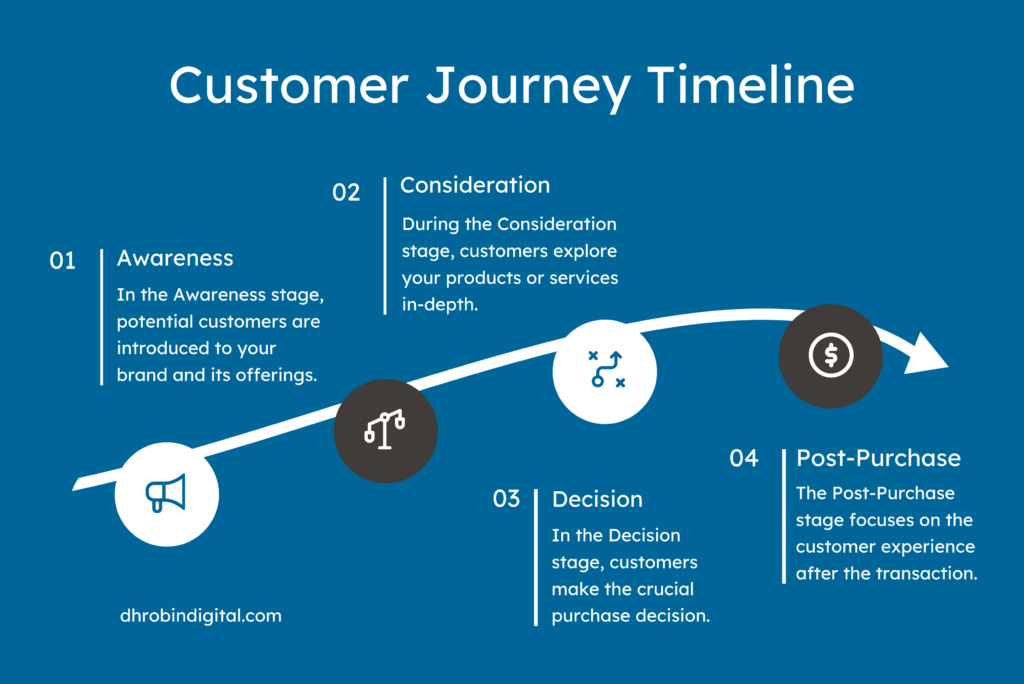
Once a customer becomes aware of your brand, the next stage is consideration. Here, potential customers actively explore solutions to their problem and compare available options. The goal for your business is to demonstrate value, build trust, and show why your product or service is the best fit.
Customer Mindset
“I’m exploring my options—why should I choose you over competitors?”
Looking for comparisons, reviews, and detailed information.
Seeking credibility and reassurance.
Touchpoints
- Brand website and landing pages optimized for clarity and ease of navigation.
- Email newsletters with valuable tips and product insights.
- Free trials, demos, or sample offerings.
- Webinars, workshops, or educational video series.
- Testimonials, case studies, and social proof.
Business Actions
Highlight your unique value proposition (UVP) clearly on your website and marketing materials.
Offer downloadable resources like guides, checklists, or whitepapers.
Encourage lead capture through forms, gated content, or newsletter subscriptions.
Share client success stories or case studies that demonstrate real-world outcomes.
Provide comparison charts showing why your solution stands out.
Key Performance Indicators (KPIs)
Number of leads captured (through forms or email subscriptions).
Engagement metrics (time spent on page, video watch duration, downloads).
Conversion of leads into free trials, demo requests, or other consideration actions.
Click-through rates on targeted campaigns.
Example
An eCommerce brand selling eco-friendly home products might offer a free downloadable guide, “10 Ways to Reduce Your Carbon Footprint at Home.” Customers who download the guide enter the consideration stage and are nurtured with targeted emails highlighting the brand’s products as solutions.
3. Decision Stage
Objective
The decision stage is when potential customers are ready to purchase. They have narrowed down options and are evaluating the final details. At this point, businesses must remove friction, reinforce trust, and make the purchase process seamless.
Customer Mindset
“I think this is the right choice—what will make me confident to buy?”
Sensitive to price, guarantees, support, and ease of purchase.
Wants reassurance that the decision is correct.
Touchpoints
Product or service pages, pricing details, and subscription plans.
Shopping cart and checkout pages.
Sales calls, live chat, or personalized consultations.
Promotional offers, limited-time discounts, or free shipping incentives.
Business Actions
Simplify the purchase process and reduce friction points.
Offer guarantees, secure checkout options, and trust badges.
Provide personalized assistance via chatbots or sales reps.
Highlight reviews, testimonials, or media mentions for credibility.
Use urgency or scarcity tactics (limited-time offers) to encourage action.
Key Performance Indicators (KPIs)
Conversion rate from consideration to purchase.
Cart abandonment rate.
Average order value.
Cost per acquisition (CPA) and return on ad spend (ROAS).
Example
A subscription-based software company might offer a 14-day free trial with no credit card required. The trial lowers barriers to entry, allowing the customer to experience the product’s value firsthand, increasing the likelihood of conversion.
4. Retention Stage
Objective
Acquiring a customer is only the beginning. Retention focuses on keeping customers satisfied, engaged, and loyal. Long-term retention drives repeat purchases, increases lifetime value, and reduces churn.
Customer Mindset
“Was this worth it? Should I continue engaging with this brand?”
Evaluating overall experience and support received.
Looking for additional value beyond the initial purchase.
Touchpoints
Follow-up emails, thank-you messages, or onboarding guides.
Customer support interactions (phone, email, chat).
Loyalty programs, reward points, or subscription perks.
Product updates, newsletters, or informative content.
Business Actions
Send welcome and onboarding emails to guide customers through the product or service.
Encourage feedback through surveys, ratings, or reviews.
Provide loyalty rewards, referral incentives, or exclusive offers.
Offer proactive customer support and educate users about product features.
Engage customers with personalized content or recommendations.
Key Performance Indicators (KPIs)
Customer retention rate and repeat purchase rate.
Customer satisfaction scores (CSAT) or Net Promoter Score (NPS).
Churn rate (percentage of customers who leave).
Engagement with post-purchase content or campaigns.
Example
A fitness app might send weekly tips, progress updates, and personalized workout suggestions. Users who engage regularly with the app are more likely to maintain subscriptions and recommend it to friends.
Every loyal customer was once a stranger — the magic lies in how you guide them through the journey.
5. Advocacy Stage
Objective
The advocacy stage transforms loyal customers into brand promoters. Advocates help expand your reach organically through recommendations, reviews, and referrals.
Customer Mindset
“I love this brand—I want to share it with others.”
Values recognition, community, and belonging.
Feels emotionally connected to the brand.
Touchpoints
Referral programs incentivizing sharing with friends.
Online reviews, testimonials, and ratings platforms.
Social media sharing and user-generated content campaigns.
Brand communities or online forums.
Business Actions
Request testimonials and encourage reviews to build credibility.
Launch referral programs with rewards for both referrer and referee.
Feature user-generated content on your channels to increase engagement.
Create community spaces (e.g., private groups, forums) to foster loyalty.
Highlight and reward loyal customers with VIP programs or early access.
Key Performance Indicators (KPIs)
Referral rate and number of new customers generated through advocacy.
Volume and sentiment of reviews or social media mentions.
Engagement with community platforms or advocacy campaigns.
Brand sentiment and overall perception in the market.
Example
A skincare brand could run a referral program where loyal customers receive discounts for every friend who makes a purchase. Simultaneously, user-generated content featuring customer reviews on social media increases authenticity and encourages others to try the products.
Conclusion
Mapping the customer journey helps businesses understand every stage of the buyer’s experience, from first discovery to advocacy. By addressing customer needs at each touchpoint, businesses can:
Increase brand awareness and visibility.
Build trust and credibility through thoughtful engagement.
Streamline purchase processes and remove friction.
Retain customers and maximize lifetime value.
Encourage advocacy to drive organic growth.
A well-executed customer journey isn’t static—it evolves as customer behavior and market conditions change. Continuous monitoring of KPIs, coupled with iterative improvements to touchpoints, ensures that your brand remains relevant, valuable, and memorable to your customers.
Share this:
- Click to share on Facebook (Opens in new window) Facebook
- Click to share on X (Opens in new window) X
- Click to share on LinkedIn (Opens in new window) LinkedIn
- Click to share on WhatsApp (Opens in new window) WhatsApp
- Click to email a link to a friend (Opens in new window) Email
- Click to print (Opens in new window) Print
- Click to share on Reddit (Opens in new window) Reddit
- Click to share on Tumblr (Opens in new window) Tumblr
- Click to share on Pinterest (Opens in new window) Pinterest
- Click to share on Telegram (Opens in new window) Telegram
- Click to share on Threads (Opens in new window) Threads
- Click to share on Pocket (Opens in new window) Pocket
- Click to share on Mastodon (Opens in new window) Mastodon
- Click to share on Nextdoor (Opens in new window) Nextdoor
- Click to share on Bluesky (Opens in new window) Bluesky
Leave a Reply